
If you’ve ever stared at a finished blog post wondering whether to add one more internal link or leave it alone, you’re not overthinking it. Internal linking is one of the most underrated levers in SEO, and getting it right can meaningfully improve how Google crawls your site and how users navigate through it.
So, how many internal links per page is best for SEO? The short answer: there’s no magic number. But there is a smart approach — and that’s what this guide breaks down.
What Are Internal Links and Why Do They Matter?
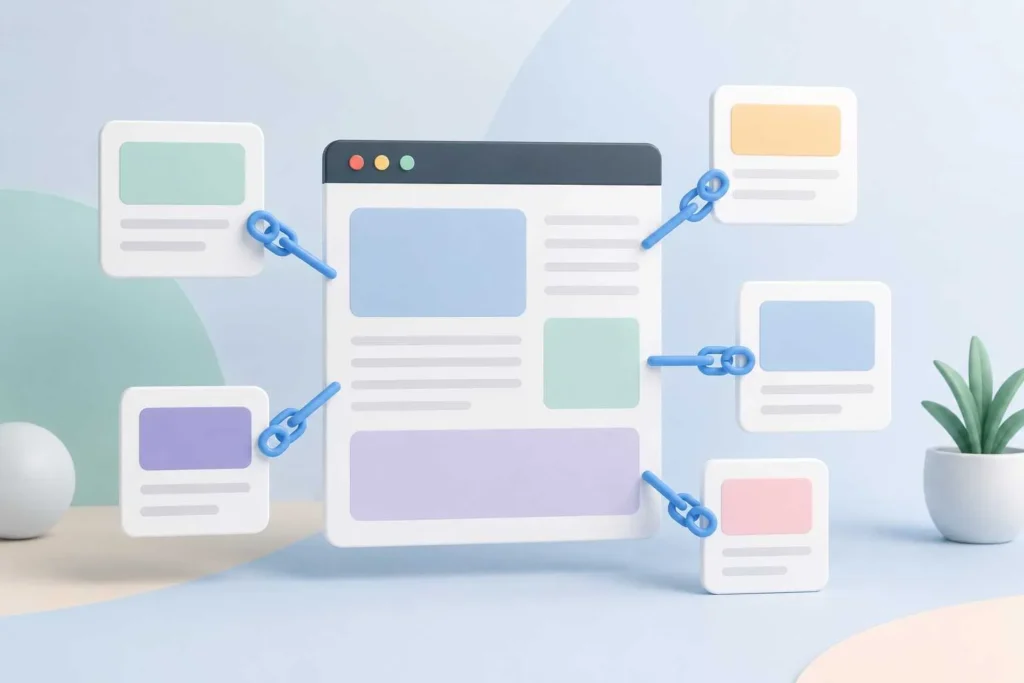
Internal links are hyperlinks that point from one page on your website to another page on the same domain. They’re different from backlinks (which come from external sites) and serve a distinct purpose in your overall SEO strategy.
When used correctly, internal links do three important things:
They help search engine crawlers discover and index pages that might otherwise get buried. They pass link equity — often called “PageRank” — from high-authority pages to lower-ranked ones. And they guide users deeper into your site, reducing bounce rates and increasing time on page.
Google has been clear that internal linking is a ranking factor. In fact, internal links are one of the primary ways Googlebot understands the structure and hierarchy of your website. Pages with strong internal link profiles tend to rank higher because they signal importance within the site architecture.
So, How Many Internal Links Per Page Is Actually Best?
Google’s own documentation doesn’t cap the number of internal links you can include on a page. John Mueller from Google has publicly stated that there’s no hard limit — but he has emphasised that links should be useful and contextually relevant, not stuffed in for the sake of it.
That said, SEO professionals and site auditors generally recommend a practical range based on page length and content type:
- For a standard blog post (800–1,500 words): 3 to 5 internal links is a reasonable benchmark. This keeps linking natural and focused without overwhelming the reader or diluting the link equity being passed.
- For longer-form content (2,000+ words): Anywhere from 5 to 10 internal links is appropriate, as long as each link adds genuine value and connects to a logically related page.
- For service pages or landing pages: 2 to 4 carefully chosen internal links are typically enough. These pages have a specific conversion goal, and too many links can distract users from the primary call to action.
The rule of thumb most SEOs live by: add internal links where they naturally fit. If you’re forcing a link just to hit a number, you’re doing it wrong.
Quality Over Quantity: What Makes an Internal Link Valuable?
The number of internal links on a page matters far less than the quality and context of those links. Here’s what separates a strong internal linking strategy from a weak one:
- Anchor text relevance. The clickable text of your link should describe the page it points to. Avoid generic anchors like “click here” or “read more.” Instead, use descriptive phrases that include the target page’s keyword or topic — this helps both users and search engines understand what they’ll find on the other end.
- Link placement. Links embedded early in the body content carry more weight than those buried in footers or sidebars. Contextual links — those that appear naturally within a paragraph — are the most valuable type.
- Destination page authority. Linking to your most important pages (think cornerstone content, service pages, or high-converting landing pages) amplifies the SEO value of internal linking. Don’t waste links pointing to thin or low-value pages.
- Avoiding orphan pages. An orphan page is one with no internal links pointing to it. These pages are hard for crawlers to find and often struggle to rank. A solid internal linking strategy ensures every important page on your site receives at least one or two contextual links from relevant content.
Common Internal Linking Mistakes to Avoid
Even experienced content teams make internal linking errors that quietly hurt SEO. Here are the most common pitfalls:
- Over-linking short content. Cramming 10 internal links into a 500-word post signals desperation to both users and algorithms. It disrupts readability and can make your page look manipulative.
- Using the same anchor text repeatedly. If multiple pages link to the same destination using identical anchor text, it can look like keyword stuffing. Vary your anchor text naturally across different posts.
- Linking to irrelevant pages. Every internal link should make sense in context. Sending readers to a loosely related page breaks their experience and wastes crawl budget.
- Neglecting older content. New posts often get internal links during publishing, but older content rarely gets updated with links to newer pages. Periodic internal link audits are a high-ROI task that most content teams skip.
Building a Smarter Internal Linking Strategy
Rather than obsessing over a specific number, think about your internal linking strategy as a system. Start by identifying your most valuable pages — your pillar content, top-converting service pages, or highest-traffic posts. These are your link destinations.
Then, every time you publish new content, identify two to five logically related pages already on your site and link to them contextually within the body. Simultaneously, go back to those existing pages and add a link to your new post where it makes sense.
This creates a web of interconnected content that helps crawlers map your site, distributes authority across your domain, and keeps users engaged longer.
Tools like Screaming Frog, Ahrefs, or even Google Search Console can help you audit your current internal link profile, identify orphan pages, and spot over-linked or under-linked content.
Final Thoughts on Internal Linking for SEO
There’s no universal answer to how many internal links per page is best for SEO, but the consensus among SEO professionals is clear: prioritize relevance, context, and user value over volume. For most content, three to six well-placed internal links per page is a solid starting point — and scaling up makes sense as your content grows longer and more comprehensive.
What matters most is building a deliberate, consistent internal linking habit into your content production workflow. Done right, internal links are one of the simplest ways to strengthen your site architecture, improve crawlability, and give your best pages the ranking boost they deserve.
At Pro Construct Digital, we help businesses develop effective SEO strategies that include smart internal linking structures designed to improve rankings, user engagement, and site performance. If you need expert guidance on optimizing your website for search engines, contact Pro Construct Digital today at 801-252-5365 to discuss your SEO goals.